Building a 60cm Reflector From Scratch
In 1988, Tim Puckett set out to build his own research-grade telescope. Nine years of machining, welding, and testing later, the finished instrument became the foundation of the Puckett Observatory World Supernova Search — and it is still hunting exploding stars today.
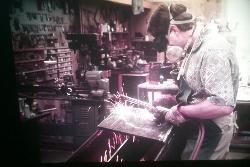
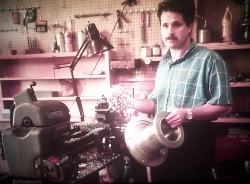
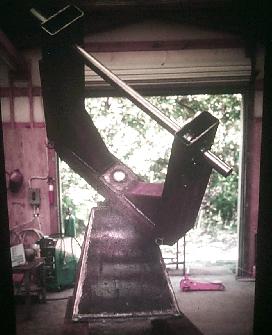
There was no kit, no vendor, and no shortcut. Every structural component of the 60–cm fork-mounted reflector — the fork arms, the right-ascension and declination axes, the drive systems, even the mounting hardware — was designed and fabricated by hand in a home workshop. The photographs below document that build, straight from Tim’s own archive.
The Fork Mount
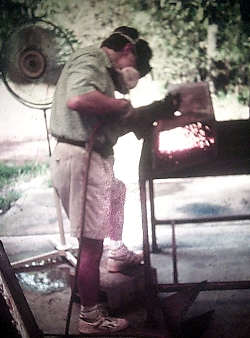
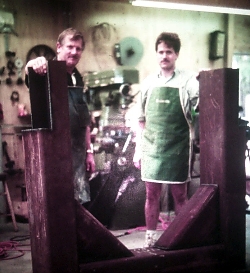
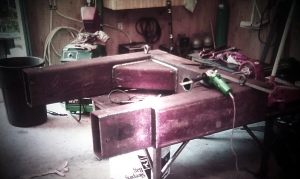
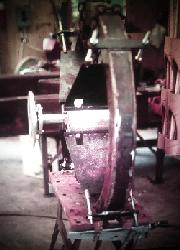
Construction began with the fork mount itself — heavy steel fabricated and welded into the structure that would carry the entire optical tube assembly.
Machining the Axes
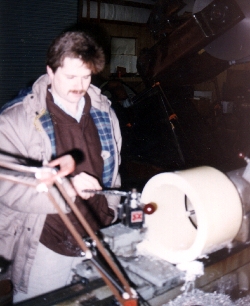
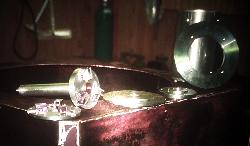
The right-ascension and declination axes required precision machining on a lathe, along with careful work with a cutting torch to shape heavy steel stock.
Parts, Fit, and Assembly
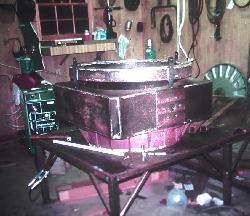
Hundreds of individual parts had to be fabricated, fitted, and assembled in sequence before the telescope could be test-fitted for the first time.
Setup and Testing
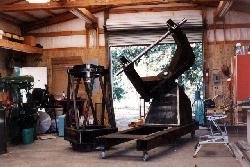
Before the telescope moved to its permanent home, it was assembled and load-tested — ramping the mount through its full range of motion to verify balance and clearance.
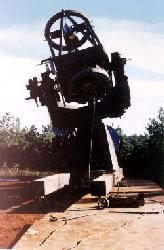
Moving Day
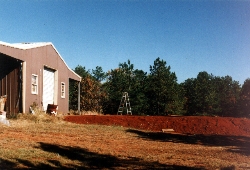
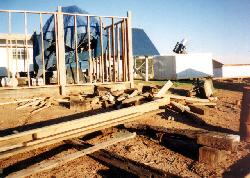
Once complete, the fork and optical tube assembly had to be carefully moved and placed into the permanent pier and dome structure.
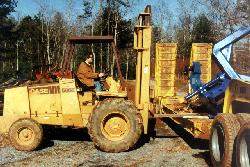
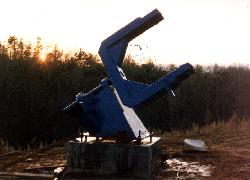
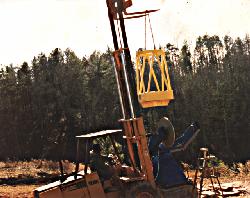
First Light
With the structure in place, the bare telescope was raised against the Georgia sky for the first time — the culmination of nine years of work.
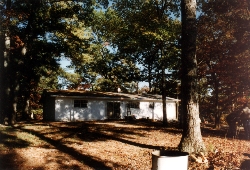
From workshop to working observatory
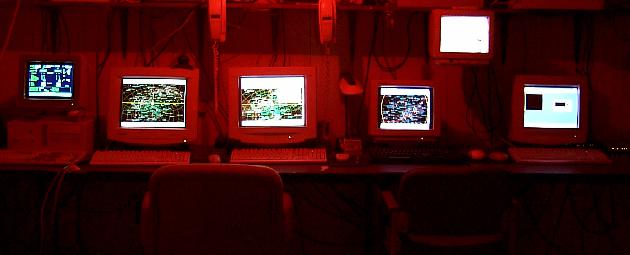
The finished 60cm reflector now runs as a robotic instrument, imaging thousands of galaxies a night from the control room Tim built alongside it — the same instrument that anchors the World Supernova Search today.
See the search program